
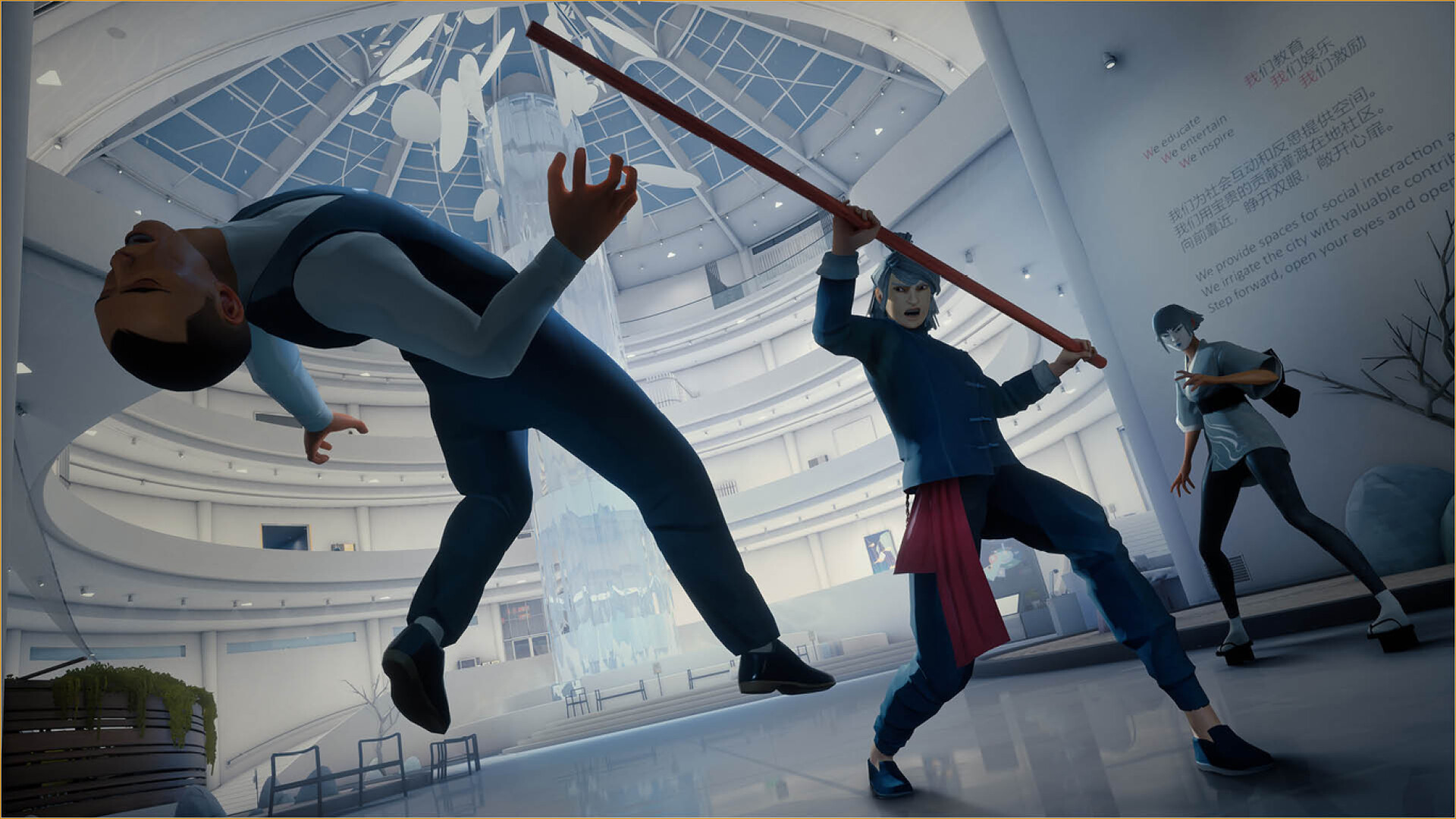
Fusing components of third-person kung fu action, Sifu utilizes a revenge narrative to introduce its roguelite gameplay. The main character, whose gender stays unspecified, embarks on a journey to seek revenge for their parent’s demise as a result of 5 qualified attackers who invaded their residence in their youth. Although the fundamental reasons are yet to be totally revealed, Sifu cleverly employs this mission for vengeance to organize its gameplay around five different levels and opponents.
Perseverance and Strategy
Like standard rogue-like video games, predominantly as a result of its expertise in where to get ps5 games online., Sifu offers a slow sense of progression with each stage. At first, players earn keys or keycards that enable shortcuts all through the level, facilitating progress in subsequent attempts. Upon finishing a stage, players have the option to skip it in future runs, though subject to a notable condition. Sifu introduces age as a metric of both advancement and consequence for failure. Every time the persona perishes, their age increases by one year, commencing from twenty and culminating at 70, which is the ultimate reset point. Yet, this doesn’t imply that players merely have a total of 50 efforts to finish the game’s five levels. Rather, failures may pile up, with consecutive failures leading to extra years added to the character’s age. For instance, two back-to-back deaths might lead to three added years. Whilst gamers swiftly pick up the gameplay sans losing general progress, multiple failures may swiftly build up, highlighting the importance of care and strategy, a core element in Sifu.
Strategic Offensive Tactics
Whilst Sifu captures the spirit of a kung-fu action narrative similar to a Bruce Lee movie or a John Wick retaliation saga, its combat mechanics echo that of a fighting video game, characterized by fluid, situational animations that seamlessly blend together. Punishments for errors can be harsh, with a single misstep resulting in significant health decline or years added to the persona’s lifespan, underscoring the video game unforgiving aspect. In Sifu, the core offensive moves revolve around simple light and heavy attacks, serving as the ones that make up the basis of combat. gamers can execute a leg sweep against a blocking opponent or throw a staggered adversary into a group to seize control over the encounter. However, successful offense depends on skilled protective maneuvers, an area where Sifu truly excels. Though the game incorporates a dodge system, it’s not tailored for prolonged escape of attacks, as opposed to traditional games featuring invincibility frames. While blocking initially provides protection, players need to hone their timing for blocking plain enemy strikes. Although blocking provides an immediate protection, it comes with a price. The player character and adversaries have a «Structure» meter, representing their sturdiness to wreck just before getting staggered and open to devastating counterattacks. For adversaries, a damaged structure prompts an opportunity for a one-hit kill with recovery advantages, while for the player character, it brings dangerously close to inevitable death. However, blocking still proves efficient at plain level, despite its drawbacks.
Challenging Boss Encounters
Whilst it might have been ideal to experience a broader array of strikes from opponents, many seem to depend on repetitious moves, diminishing the factor of surprise. Presenting more diversity of attacks would increase the learning curve but would provide increased exciting encounters as time goes on. Instead, several adversaries appear like rehashed or resized iterations of previously withstood foes. Consider purchasing Sifu for an immersive martial arts adventure. Boss fights in Sifu stand out as one of its most exciting factors. The arenas crafted for these encounters, regularly developing as the battle advances, are remarkably imaginative and suitable of epic encounters. If Sifu is therefore difficult by default, the bosses can be particularly punishing, possibly leading to frustration among players who struggle to defeat them. This element might prove to be most daunting, despite the allure of participating in boss fights being a significant selling point. Making gradual progress remains rewarding, even if it takes significant effort to defeat a mid-level mini-boss and obtain a shortcut key. Moreover, the elation of victory over a boss is unparalleled. It seems as if you have genuinely outmaneuvered an adversary by analyzing their techniques—whether through sheer skill or aided by magical resurrection abilities—and exploiting their weaknesses.

Resource Management and XP Spending
Progression in Sifu manifests in various forms, with one obvious aspect centering around the finishing of levels, usually lasting 10 to 20 minutes depending on the player’s experience and level of skill. Upon beating a boss, the video game solidifies the player’s age, allowing them to advance to the next phase at any time, but just at that specific age. Although gamers may opt to redo previous levels to improve their strategies and finish at a younger age, progressing offers benefits because of unlocked shortcuts. Within this broader scope of progression, gamers are able to unlock upgrades throughout individual runs or lasting abilities which persist across following playthroughs. Upon each character’s death, players have the option to spend earned XP from defeating enemies to acquire different moves, perhaps a charged punch or potent leg sweep, each using a percentage of the focus bar—a meter powered through working or getting damage. At first, buying a move unlocks it for the present run, but after acquiring it five times within the same streak, it transforms into permanently available.
Diverse Upgrade Options
Moreover, places of worship dispersed throughout every stage offer more significant enhancements that exclusively endure for one run. Gamers could select 1 enhancement for every shrine, selecting enhancements like increased health if performing finishing moves, strengthened structural intactness, better gun durability, or an expanded focus bar. These enhancements feature diverse costs—either experience points or scores—but are viewed as probably the most significant upgrades for each and every attempt.